IT company in Houston, Texashello@hawkonix.com
Start a project
Industries

Restaurant Software Development and Marketing

Restaurant software development for owners who are tired of stitching together ordering apps, POS reports and spreadsheets. We build online ordering, integrations, kitchen and inventory tools, and the local marketing that fills tables.

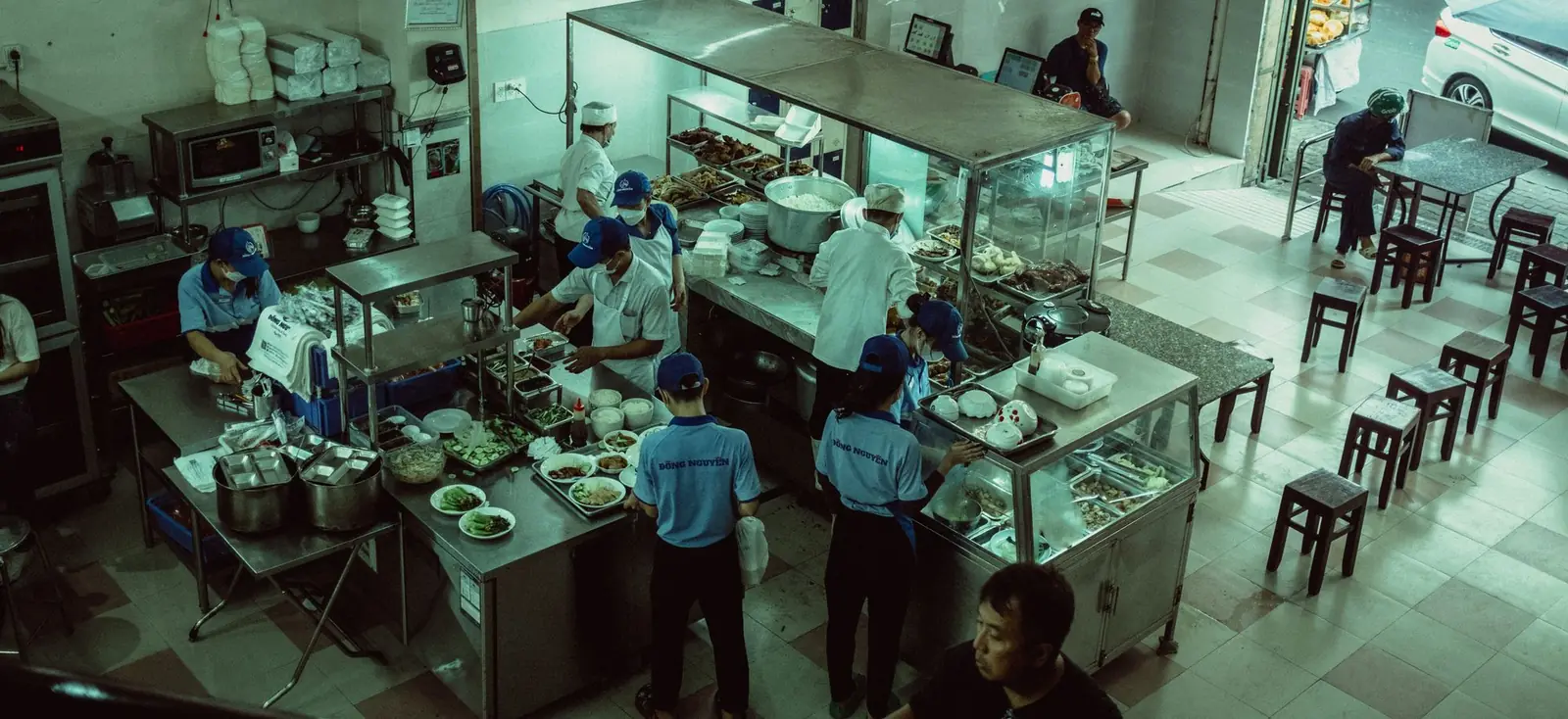
Chef plating dishes on the line in a busy restaurant kitchen
Typical projectsOrdering, integrations, dashboards
PlatformsWeb, iOS, Android, kitchen displays
Typical timeline4–14 weeks
Based inHouston, Texas

Restaurants run on thin margins and tight timing. A delayed ticket, a menu price that is wrong on one delivery app, or a food cost that creeps up for three months can wipe out a good week. Most restaurants already have a POS. The trouble is everything around it: third-party delivery tablets, separate reservation tools, paper prep lists and reports that do not talk to each other. Restaurant software development fixes the gaps.

Hawkonix is a software and marketing company in Houston, Texas. We build custom ordering, integrations and dashboards for restaurants, cafes, food trucks, caterers and commissary kitchens, using the same engineering practices behind our own retail POS products. Below we cover the operating problems restaurants face and the specific systems and marketing we build to address them, from the counter to the kitchen.

Operational problems restaurants actually face

The modern restaurant counter often has three or four delivery tablets beside the POS. Staff re-key orders, menus drift out of sync, and an item that sold out at 7 p.m. stays orderable online until someone remembers to switch it off. Commission fees from marketplaces take a large share of each delivery order, so many owners want direct online ordering that they control.

Behind the scenes, food cost and labor are the two numbers that matter most, and both are hard to see in real time. Inventory is counted on paper, recipes are not costed, and labor scheduling is done by gut. Multi-location groups need consistent menus and reporting across stores. Catering and large orders often run through email and phone with no system at all.

  • Menus and availability out of sync across channels
  • High commission on marketplace delivery orders
  • Food and labor costs seen weeks too late
  • Catering and large orders handled by email

Online ordering and channel integration

We build direct online ordering for restaurants as a fast web app and, when it makes sense, a branded mobile app. Customers order pickup or delivery from you, pay online, and the order goes straight to your POS or kitchen display instead of a separate tablet.

Where your POS and delivery partners offer APIs, we connect them so one menu feeds every channel and sold-out items disappear everywhere at once. Our backend and API work includes order routing, payment processing through established providers, and logging so a failed order is flagged instead of lost. We design for the dinner rush: load testing, retries and clear fallbacks if a partner API goes down. Where a partner offers no API, we explain the options plainly, including when the manual tablet is still the most practical choice for now. Every integration gets monitoring after launch.

Kitchen, inventory and cost tools

Custom kitchen tools are often simple and high value. Examples include prep lists generated from forecast covers, recipe costing that updates when supplier prices change, waste logs on a tablet, and temperature and food safety checklists that keep a timestamped record for inspections.

For owners and operators, we build dashboards that pull sales from the POS, labor from the scheduling tool and purchases from supplier invoices, then show food cost and labor percentage by day and location. Commissaries and multi-unit groups often need ordering between stores and a central kitchen, which is close to the wholesale ordering workflows we built into Distrohawk. Cafes and quick-service spots with retail shelves can look at CornerHawk, which includes deli and online ordering. Kitchen screens are designed for quick taps with wet hands. Everything works on standard tablets, so you do not need special hardware.

Catering, reservations and loyalty

Catering is often a restaurant's most profitable work and its least organized. We build catering request forms, quote builders with per-person pricing, deposit collection and a production sheet that the kitchen can follow. Orders land in one place with dates, headcounts and dietary notes.

For loyalty, the goal is to own the customer relationship rather than rent it from a marketplace. We build simple points or visit-based programs tied to direct orders, with email and text reminders. If you already use a reservation or loyalty platform, we integrate with it instead of replacing it. Our UI/UX design team keeps ordering flows short, because every extra step costs orders on a phone screen. Catering pages can also feed your marketing, because past catering clients are a strong list for seasonal and holiday offers. We keep that data in your hands, not a third party's.

Restaurant marketing that drives covers and orders

Restaurant searches are local and urgent: tacos near me, open now, delivery. Local SEO comes first. We keep your Google Business Profile accurate with hours, menu links, photos and holiday changes, and set up review requests after direct orders.

Social media marketing works best for restaurants when it shows real food and real specials, so we plan simple content calendars your team can sustain. For direct ordering, we run targeted local ads and email campaigns and measure them against orders placed, not likes. In a food city like Houston, consistent local presence matters more than any single campaign. For multi-location groups, each location gets its own listing, menu link and local page. We also watch your review responses, since a calm, specific reply to a bad review often matters as much as the review itself. Reports show calls, direction requests and direct orders by location.

01Deliverables

What you get from us

Direct online ordering

A fast, mobile-first ordering site or app for pickup and delivery, connected to your POS or kitchen display, with online payments and order tracking.

Menu and channel sync

One menu source feeding your POS, website and supported delivery partners, with item availability updates pushed to every channel at once.

Kitchen and food safety tools

Tablet prep lists, waste logs and temperature checklists with timestamped records, designed for gloves, grease and quick taps during service.

Cost and sales dashboard

Daily food cost, labor percentage and sales by channel and location, pulled from your POS, scheduling and supplier data. Reports run on any device.

Catering system

Request forms, quote builder, deposits and kitchen production sheets so catering orders are tracked from inquiry to delivery. Nothing lives in email anymore.

Local marketing program

Google Business Profile management, review flow, social content plan and order-focused local campaigns with monthly reporting. We tie each campaign to direct orders where possible.

02Process

How the work runs, step by step

Service observation

We watch a real service, review your POS, delivery tablets and back office, and talk to the kitchen and front of house to find where orders and money slip.

Scope and priorities

We rank fixes by impact and effort. Often direct ordering or menu sync comes first, followed by cost dashboards and marketing. You approve each phase before work starts.

Design and build

We design ordering flows and kitchen screens, build in short cycles and show working versions to your staff for feedback during quiet hours. Nothing launches untested.

Testing under load

We test with realistic order volume, payment edge cases and partner outages so the system holds up on a Friday night. We fix issues before launch day.

Launch and support

We launch with your team, watch the first busy services, and provide ongoing maintenance and marketing support afterward. Support continues as menus and channels change.

Budget

What affects the cost

Cost depends mostly on integrations. A direct ordering site that sends orders to a kitchen display is simpler than one that syncs menus with a POS and several delivery partners. Partner API access and the quality of their documentation also affect effort.

Other drivers are the number of locations, whether you need a native mobile app or a web app is enough, custom catering or loyalty logic, and ongoing marketing scope. We give a written estimate with phases, so you can start with the highest-impact piece.

See our engagement models or ask for a written estimate.

03Our products

Built on the same stack we ship

Hawkonix designs, builds, hosts and supports these products every day. The same engineers work on client projects.
04FAQ

Questions we hear often

Do you replace our restaurant POS?
Usually not. Most restaurants already have a POS that handles the dining room well. We build around it: direct ordering, integrations, dashboards and kitchen tools. If your POS has no usable API, we will tell you early, since that limits what can be automated.
Can you connect our delivery apps to one menu?
Often, yes. It depends on whether your POS and delivery partners provide APIs or supported integration paths. Where they do, we build one menu source and push changes and sold-out items to every channel. Where they do not, we look at middleware options.
Is a mobile app worth it for a single restaurant?
For many single locations, a fast mobile web ordering site is enough and costs less to build and maintain. A native app makes more sense when you have strong repeat customers, a loyalty program or several locations. We will recommend the simpler option when it fits.
How do you handle online payments?
We use established payment providers so card data is handled by them rather than stored on your servers. This reduces your PCI compliance scope. We support tips, refunds and partial refunds, and we test failed payment and timeout cases before launch.
How long does a direct ordering system take?
A direct ordering site with payments and kitchen display output typically takes 4 to 8 weeks. Adding POS menu sync, delivery partner integrations or a native app extends that, and multi-location groups usually take longer because of menu and reporting differences.
Do you do restaurant marketing in Houston?
Yes. We are based in Houston, Texas, and handle local SEO, review management, social content and local ads for restaurants here and in other US markets. We tie marketing to direct orders where possible so you can see what each campaign earns.

Let’s build it in Houston.

Tell us what you want to build, fix or grow. You will talk to an engineer, not a sales script, and get a written scope with an honest estimate.

We reply within one business day. Your details are used only to answer you — see our privacy policy.